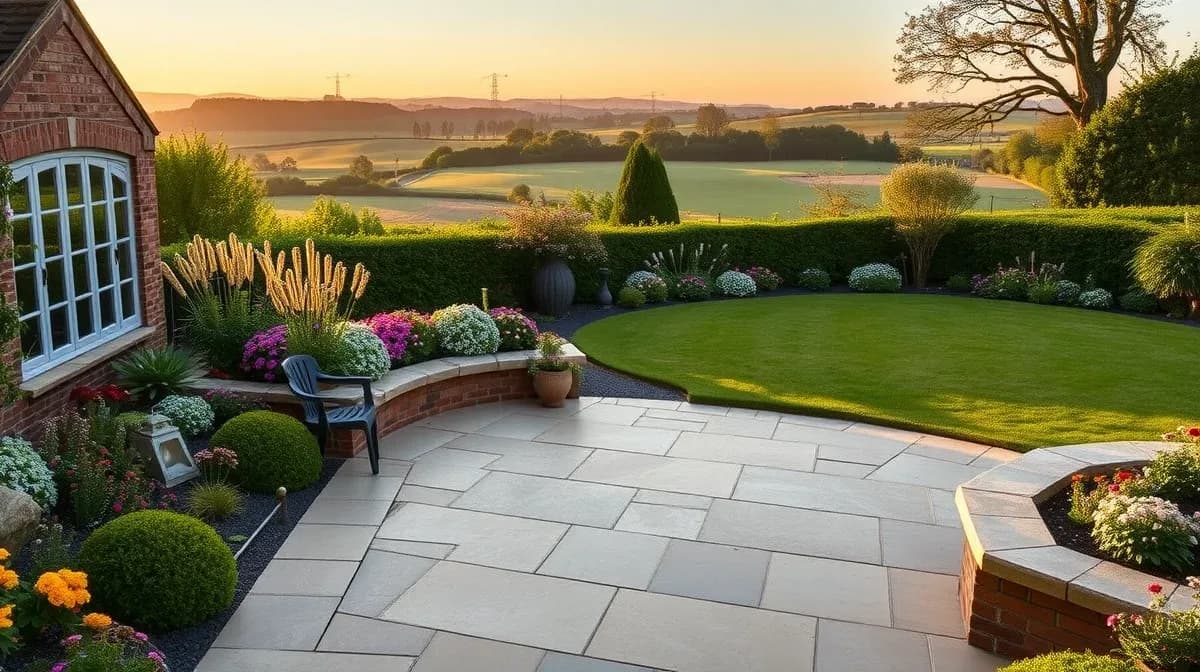
Newbury Landscaping | Landscape Gardeners in Newbury — Garden Design, Driveways, Patios & Planting
Garden design, patios, planting and full landscaping across West Berkshire. Free surveys, fixed written quotes, tidy workmanship.
Newbury Landscaping design and build gardens across Newbury, Thatcham, Hungerford, Kintbury, Hermitage, Chieveley, Compton and the West Berkshire villages. Garden design and full renovations, resin and gravel driveways, patios, planting schemes, lawns, retaining walls, hedging and garden lighting.
Gardens out here are generally bigger, more exposed and more varied than a town plot, and the ground changes within a couple of miles. Down in the Kennet valley you are on gravel and alluvium — free-draining, easy to dig and quick to dry out in a hot summer. Up on the downs around Compton and Chieveley it is chalk under a shallow, flinty topsoil, alkaline and unforgiving of anything that wants acid ground.
So we design for the plot rather than applying a formula to it. That means testing the soil rather than assuming it, planting things that will actually thrive where they are put, and treating shelter as part of the design on an open site — because a beautiful scheme in an exposed position is only beautiful until the first real wind.
What we design and build
Every garden gets the same treatment — behind a Victorian villa off Newbury town centre, on a new-build estate at Sandleford, or a paddock-edged plot towards Lambourn.
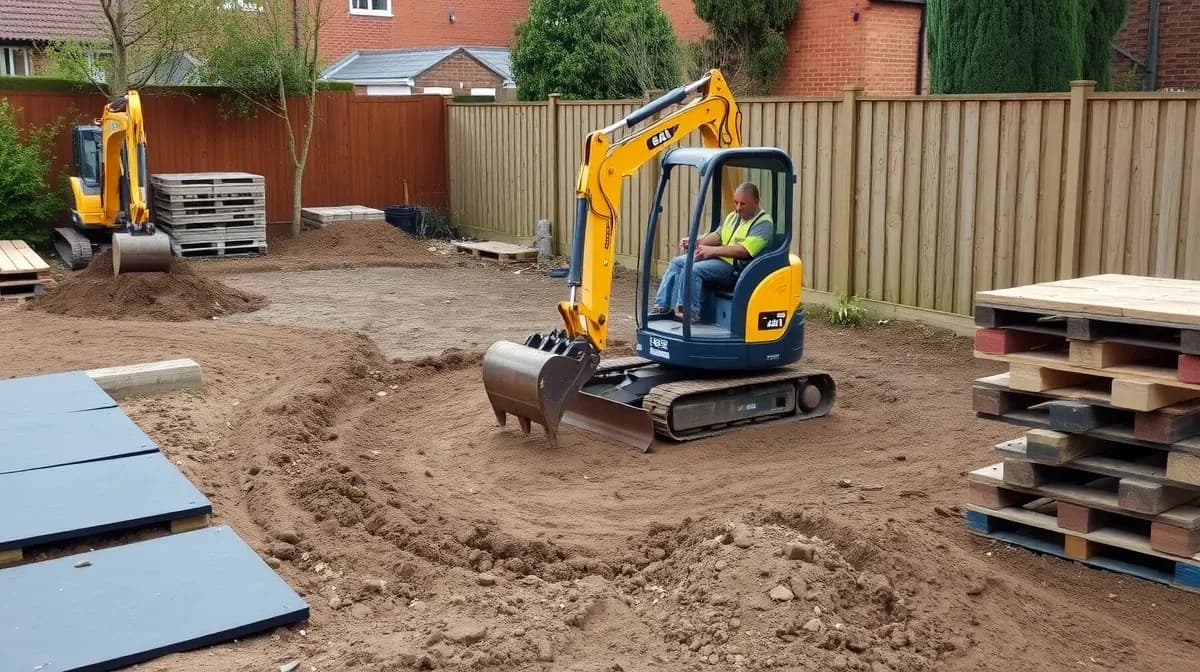
Full Garden Renovations
Complete transformations, designed once and built in sensible phases.

Garden Design
Measured surveys, scaled plans and planting schemes — the drawing that makes the rest of the job go right.
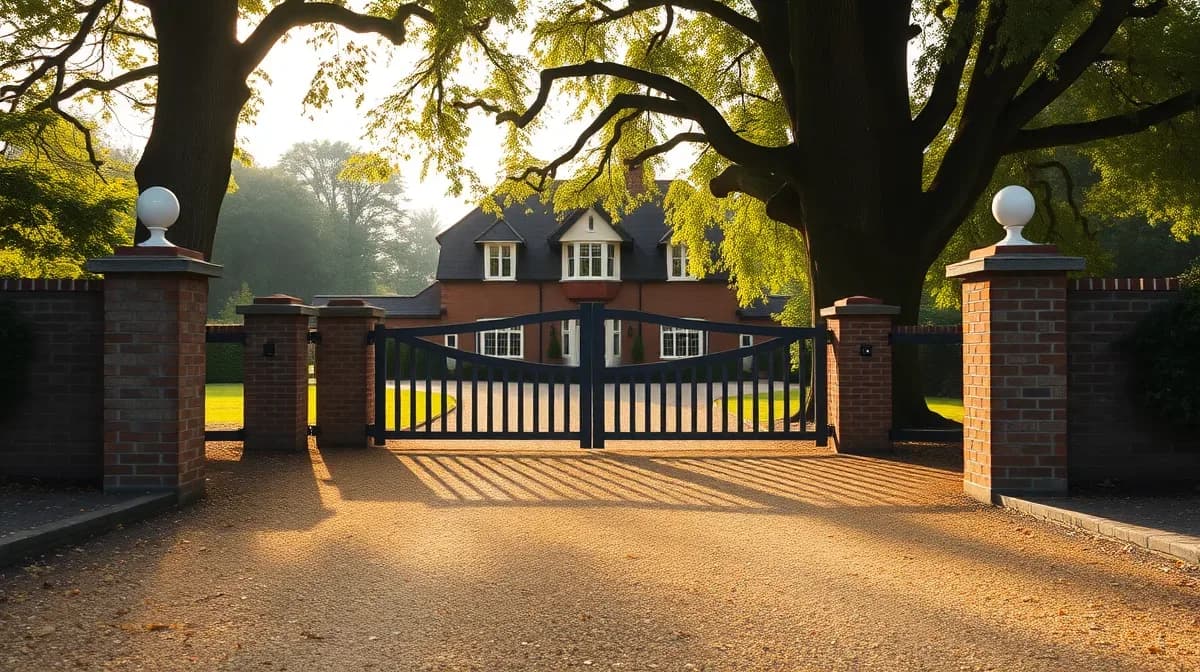
Gravel Driveways
Cotswold and Breedon gravel drives with real edging, gates and a base that stays put.
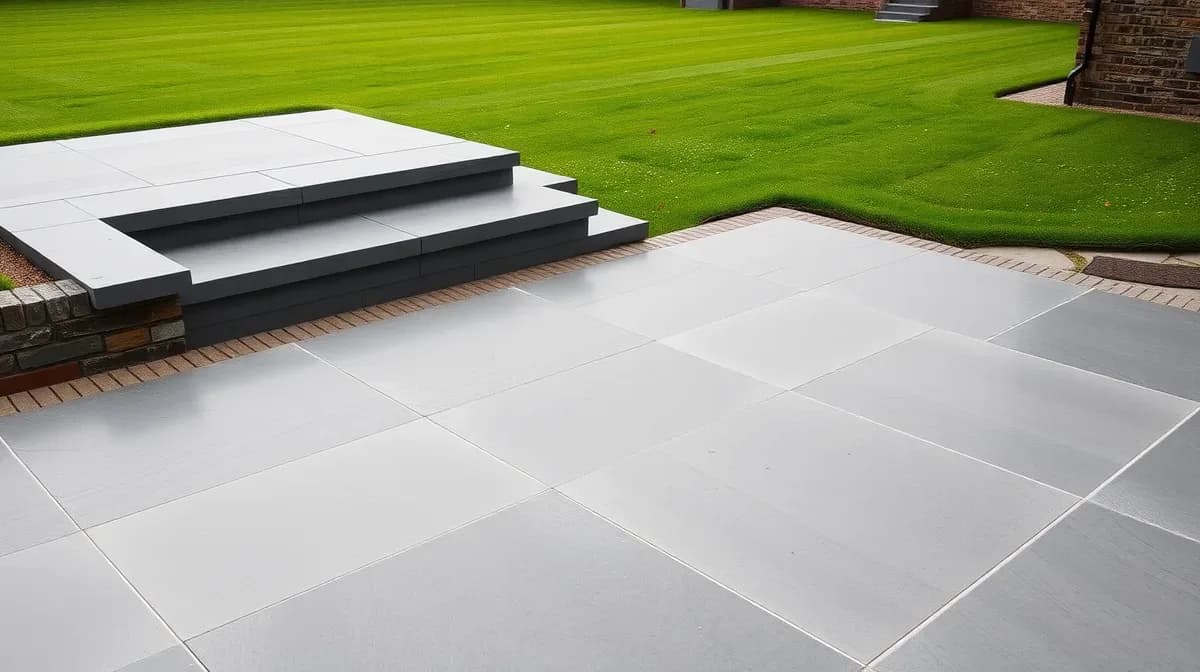
Patios & Paving
Porcelain, natural stone and block paving with steps and levels handled properly on sloping plots.
Garden design in West Berkshire
Design first, build second. On a rural plot the design stage costs a fraction of the build and determines whether the build is worth having.
Full garden design
A measured survey, a considered layout and a drawn plan you can actually build from — rather than a rough sketch and a hope. On a large plot the design stage is what stops the money being spent in the wrong places.
Garden renovations
Taking a tired or overgrown garden back and rebuilding it as one coherent space. It is a bigger undertaking than replacing individual elements and it produces a garden that reads as deliberate rather than accumulated.
Zoning and levels on large plots
Big gardens work when they are divided — a terrace near the house, lawn beyond, something more informal at the far end. Without that division a large garden simply reads as a field with a house on it.
Shelter and windbreaks
On downland plots the prevailing wind dictates where you can sit, what will grow and how quickly a young tree establishes. Hedges, tree belts and permeable screens do far more than a solid fence, which just creates turbulence behind it.
Soil surveys and ground conditions
We test rather than assume. The valley gravels and the chalk downland are entirely different growing media, and a planting plan written for the wrong one fails slowly and expensively.
Planning, trees and protected sites
Much of West Berkshire sits within the North Wessex Downs National Landscape, and tree preservation orders are common on established plots. Both are checked before design work starts.
Phased builds
A large garden does not have to be built in one season. A proper plan lets it be built in stages over two or three years without the later phases looking bolted on.
Hard landscaping we build
Resin driveways
Resin-bound aggregate laid seamlessly over a solid base. Permeable, quiet, and it suits a long rural drive where a loose surface would end up spread across the lane.
Gravel driveways
The traditional West Berkshire answer, and still the best value on a long approach. A stabilising grid keeps the gravel where it was put on slopes and at turning points.
Patios and terraces
Sawn sandstone, porcelain and limestone, bedded fully and laid to a fall away from the building. On a large plot the terrace is the one part of the garden used almost daily, so it is worth the better material.
Composite decking
Decks over uneven or sloping ground, in composite boards that need no annual treatment. On a rural plot with mature trees and heavy leaf fall, a low-maintenance surface earns its extra cost quickly.
Retaining and sleeper walls
Terracing sloping ground with sleeper or block retaining walls, with drainage behind them. Anything holding back significant height needs designing properly rather than built by eye.
Fencing and gates
Post-and-rail, closeboard and estate fencing, plus driveway gates on longer approaches. Post-and-rail suits open country where the point is stock control rather than screening.
Paths and stepping stone routes
Getting people around a large garden dry-footed and safely after dark. On big plots the route people actually walk is rarely the one on the plan, so it is worth observing before it is set in stone.
Drainage and soakaways
New hard surfaces have to put their water somewhere. On chalk that is usually straightforward; on the valley clays and made ground it needs designing rather than assuming.
Planting, lawns and hedging
Planting design and borders
Planting schemes drawn to scale, chosen for the aspect, the soil and how much time you genuinely want to spend maintaining them. A border that needs weekly attention and does not get it looks worse than one that was never planted.
Chalk and alkaline soil planting
The downland soils here are thin and alkaline. There is a wide and beautiful palette that loves those conditions, and a shorter list that will slowly sulk and die in them. We work with the first.
Turfing and new lawns
Ground prepared, levelled and rootzoned before turf goes down. On free-draining valley gravel a lawn needs more organic matter worked in than most people expect, or it browns off in the first dry spell.
Lawn care and treatment programmes
Feeding, scarifying, aerating and weed control across the season. Most tired lawns are compacted rather than starved, and aeration does more for them than fertiliser.
Wildflower and meadow areas
Thin chalk soil is the ideal medium for a meadow — low fertility is a positive here. It suits large plots where mowing everything is neither wanted nor practical.
Hedge planting and screening
Native mixed hedging, beech, hornbeam and yew for boundaries and shelter. Planted bare-root in the dormant season it establishes better and costs a fraction of container stock.
Tree planting
Specimen and orchard trees, staked and mulched properly and watered through their first two summers. Most young tree failures are down to drought in year one, not to the planting.
Garden maintenance
Ongoing care for larger gardens — mowing, hedge work, border maintenance and seasonal cutting back, so a garden that has been designed properly continues to look like it.
Garden lighting and finishing detail
Garden lighting design
Lighting planned as part of the garden rather than added at the end. A handful of well-placed fittings does far more than a row of identical spikes down a path, and it doubles the number of months the garden gets looked at.
Lighting installation and cabling
Low-voltage and mains systems installed with cable run in ducting at the right depth during the build. Retro-fitting lighting into a finished garden means digging up work you have just paid for.
Uplighting trees and planting
Uplighting a mature tree or a specimen shrub is the single highest-impact lighting move in any garden, and one of the cheapest. Warm colour temperatures, aimed away from windows.
Step, path and safety lighting
Level changes, steps and the route from the parking to the door lit properly. On a rural plot with no street lighting this is a practical requirement rather than an aesthetic one.
Outdoor power and water
Sockets, outside taps and irrigation points positioned where they will actually be used, installed while the ground is already open.
Irrigation for larger gardens
Free-draining valley soils dry out fast, and hand-watering a large new planting scheme through a hot July is not realistic. Automatic irrigation on new borders protects the investment.
What landscaping costs in and around Newbury
We price most hard landscaping by the square metre and most boundaries by the metre, because that is how the materials and labour actually work out. Chalk subsoil across West Berkshire helps on drainage but means the sub-base has to be built properly.
| Work | Typical cost | Time on site |
|---|---|---|
| Turfed lawn, installed | £18 – £28 per m² | 1–2 days |
| Porcelain patio, laid on a full build-up | £185 – £260 per m² | 5–10 days |
| Gravel driveway, full build-up | £55 – £90 per m² | 3–6 days |
| Closeboard fencing, 1.8m | £95 – £140 per metre | 1–3 days |
| Single-zone garden renovation | £9,000 – £15,000 | 3–5 weeks |
Guide ranges for 2026, based on the jobs we price most often. Access, condition and spec move the figure — every job gets a free survey and a fixed price in writing before any work starts.
How a Newbury garden design and build runs
Step 1 — Design consultation and survey
The first visit is mostly listening — how the garden gets used now, what you have stopped using it for, and what you want it to do. Alongside that we measure up and record levels, aspect, existing trees and where the prevailing wind comes from.
Step 2 — Soil testing and ground assessment
We test rather than assume. The Kennet valley gravels and the downland chalk are entirely different growing media, and a planting plan written for the wrong one fails slowly, expensively and about eighteen months after you paid for it.
Step 3 — The drawn plan and phased pricing
A scaled plan showing layout, materials and planting, priced element by element and area by area. Because it is phased, you can build the terrace this year and the far end next — and the later phases still fit, because they were designed together.
Step 4 — Clearance and groundworks
Clearing, levelling, terracing and any retaining structures, with drainage designed in behind them. On a sloping downland plot this stage is frequently the largest single line in the budget and the one that makes everything after it possible.
Step 5 — Hard landscaping construction
Terraces, paths, drives, walls, steps and structures built on properly compacted bases with real falls. On a large plot the terrace gets used almost daily, so it is the one place worth spending on the better material.
Step 6 — Planting, lighting and aftercare
Planting to the drawn scheme, lighting cabled in ducting while the ground is still open, and irrigation on new borders where the soil is free-draining. You get an honest aftercare briefing — a new scheme depends more on watering through its first summer than on anything done at installation.
Who we design and build for in West Berkshire
Village and country homeowners
Larger, more exposed plots where a garden has to work as a whole rather than as a collection of separate features. On open ground shelter gets designed in from the start, because a beautiful scheme in the wind is only beautiful until February.
Period property owners
Older houses where a modern catalogue garden would look wrong against the building. Materials and proportion matter more here than they do on a new plot.
Equestrian and rural properties
Gardens that sit alongside working land — paddock boundaries, all-weather access, and planting that survives being close to stock and machinery.
Downsizers and later-life moves
Re-planning a large garden around less maintenance without turning it into a car park: fewer, better borders, easier access and a lawn that has stopped being a second job.
Second homes and let cottages
Gardens that have to look after themselves between visits, and still look cared for when somebody arrives on a Friday night.
Whole-garden renovators
Households taking a tired garden back to nothing and rebuilding it once, properly, as one coherent design rather than in a decade of unrelated pieces.
West Berkshire gardens are their own thing
Gardens here sit on chalk downland — free-draining, alkaline soil that lavender loves and rhododendrons hate — and plots slope more than people expect, which is why steps and retaining walls feature so heavily in our work. The mix of properties is wide too: walled gardens behind the Victorian villas near the town centre and the Kennet & Avon canal, family gardens on the newer Sandleford estates, and big rural plots out through Chieveley, Kintbury and the racehorse country around Lambourn. We design for the ground in front of us, not a catalogue garden.
Frequently asked questions
Ready for a free, no-obligation quote?
Call 01635 884658